
Want a greener outdoor space with less work? Explore the Best Artificial Outdoor Plants for your balcony, patio, garden, or porch.
Want to keep your outdoor space green without spending time on plant care? Best Artificial Outdoor Plants can help you decorate your balcony, patio, or garden with realistic greenery. Explore different styles, from leafy palms to colorful flowers, and find options that suit your space.
Best Artificial Outdoor Plants
1. Artificial Boxwood Plants for Garden Entrances

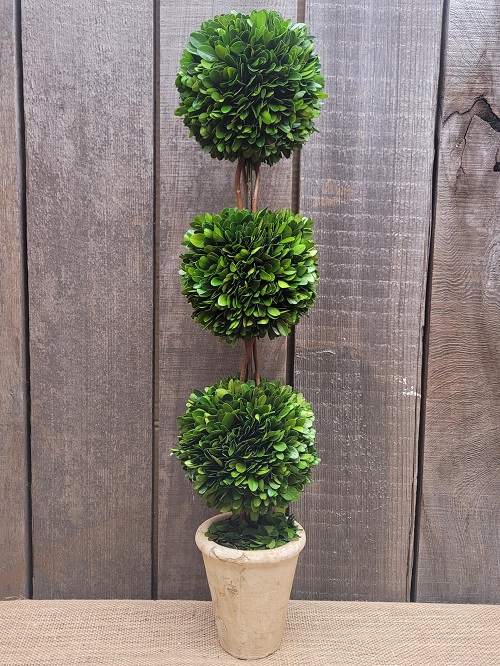

Artificial boxwood plants are a good choice if you like a neat and well-arranged outdoor space. Their small leaves create a dense appearance, and you can find them in round, square, spiral, and cone shapes.
You can place two artificial boxwood topiaries on either side of your front door. They also look good near garden paths, outdoor steps, and patio entrances.
When choosing a boxwood plant, check the leaf density and color. Some cheaper designs have very shiny leaves that look unnatural in direct sunlight. Choose a plant with different shades of green and a slightly varied leaf arrangement.
A UV-resistant boxwood plant is a better option for an exposed outdoor area.
2. Artificial Areca Palm for Balconies and Patios
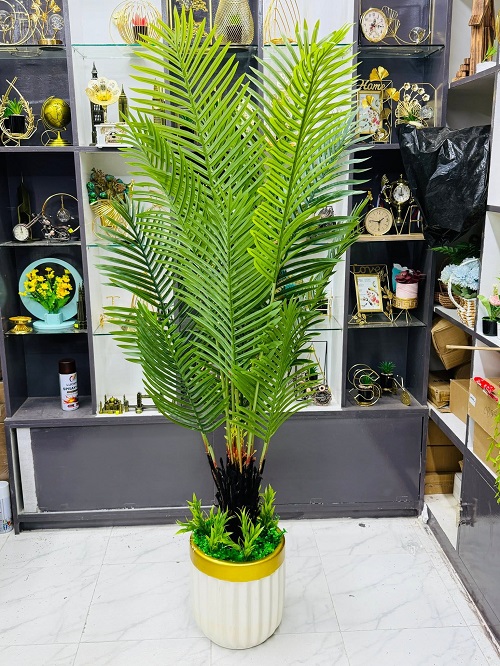
If you have an empty corner on your balcony or patio, an artificial areca palm can fill it nicely. Its long, narrow leaves spread out from several stems and create a full appearance.
You can place a tall palm beside your outdoor sofa or near a seating area. It also works well in large planters placed near glass doors and covered patios.

NOTE: Check the height and width before buying. A very large palm may take up too much space on a small balcony. Look for a design with several stems and leaves in different directions. This gives the plant a more natural shape.
Choose a heavy planter or secure the base properly if you plan to keep it in a windy location.
3. Artificial Ferns for Hanging Baskets
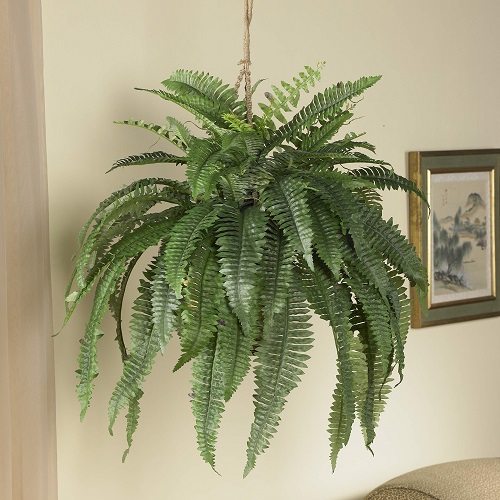
Artificial ferns are useful when you want to decorate an outdoor space without adding more pots to the floor. Their long leaves spread over the sides of hanging baskets and create a full green display.
Boston fern designs are particularly popular for porch and balcony decoration. You can hang them near windows, along covered patio walls, or from sturdy ceiling hooks.
Before buying, look closely at the leaves. Choose a fern with several layers of thin foliage instead of one with only a few thick branches. This makes the basket look fuller.
If you hang the fern outside, use a strong hook and check that the basket can handle wind. A covered balcony or porch is usually a better place for delicate artificial foliage.
4. Artificial Eucalyptus for Modern Outdoor Spaces
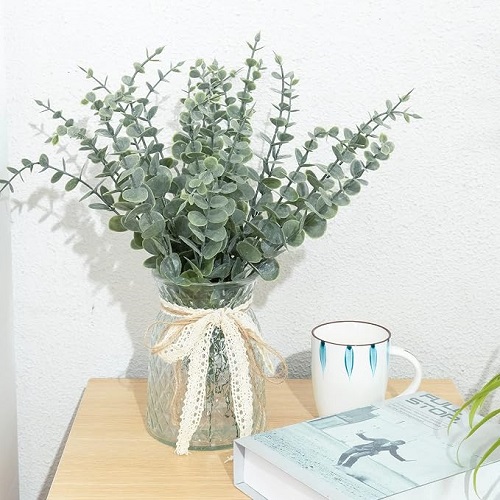
Artificial eucalyptus plants suit outdoor spaces with simple furniture and neutral-colored decorations. Their rounded leaves and muted green shades look different from the usual artificial foliage.
You can place a small eucalyptus plant on an outdoor table or use a taller version beside a patio chair. They also look good in terracotta and stone-finish planters.
Choose a design with different leaf sizes and natural-looking branches. Avoid plants with identical leaves arranged in a perfect pattern.
Eucalyptus stems can also work in mixed arrangements. Place them with artificial flowers or other leafy plants to create a fuller display.
5. Artificial Flowering Plants for Colorful Planters
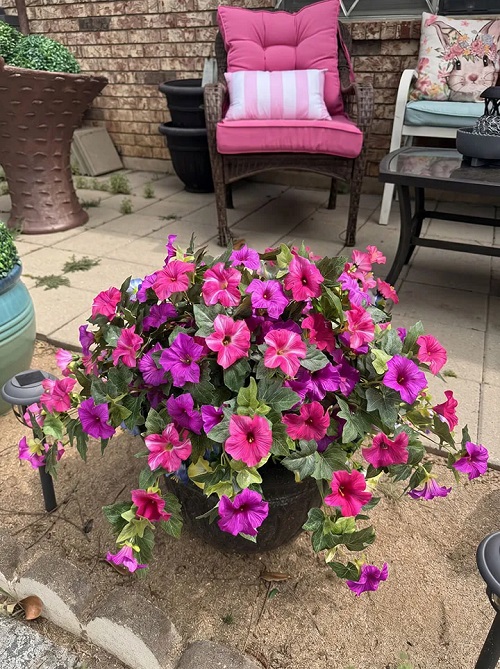
If your outdoor space looks too green, artificial flowering plants can bring in some color. You can choose petunias, geraniums, hydrangeas, or other flower designs to decorate your balcony and garden entrance.
Artificial petunias look good in window boxes because their flowers and leaves can spread over the edges. Geraniums work well in individual pots, while hydrangeas suit larger decorative planters.
Check the flower petals before purchasing. They should have natural folds and slight color variations. Flowers with stiff, shiny petals can look fake from a distance.
For an open outdoor area, choose UV-resistant flowers because sunlight can fade bright colors over time.
6. Artificial Bamboo Plants for Balcony Privacy
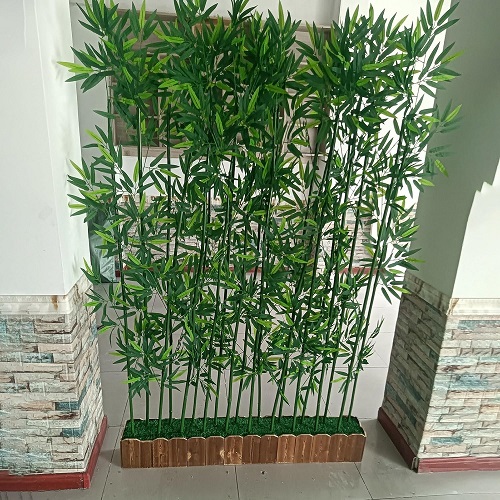
Artificial bamboo plants are a useful option if you want to add height to your balcony or patio. Their upright stems and narrow leaves create a screen-like appearance.
You can place them along a balcony railing or beside an outdoor seating area. Tall bamboo plants also help fill narrow corners where spreading plants may not fit.
Look for a design with several stems and leaves at different heights. A plant with only a few straight stems may look too artificial.
Use a sturdy planter to prevent the plant from falling over. Remember that artificial bamboo does not provide complete privacy like a dense living screen, so check its width and foliage coverage before buying.
7. Artificial Ivy and Hanging Vines for Outdoor Walls
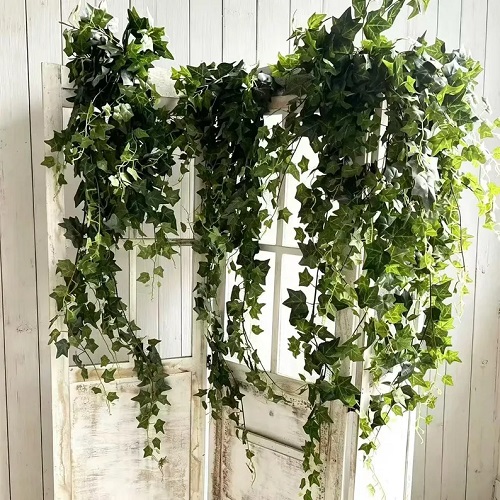
Artificial ivy and hanging vines are useful when you want to decorate a plain outdoor wall. You can attach them to railings, trellises, shelves, or wall-mounted planters.
These plants work particularly well in small balconies because they do not need much floor space. You can also place them in hanging pots and let the leaves fall naturally over the sides.
Choose vines with different leaf sizes and natural spacing. If all the leaves look identical, the arrangement may appear artificial.
Check the material and UV protection before using them on an exposed wall. Strong sunlight can damage some types of plastic foliage.
What to Check Before Buying Artificial Outdoor Plants
Choosing the right plant is not just about its appearance. Outdoor conditions can affect its color, shape, and overall quality. Keep these points in mind before placing an order.
UV Protection
Sunlight is one of the biggest problems for artificial outdoor plants. Continuous exposure can fade the leaves and make some materials brittle.
Look for plants labeled UV-resistant or UV-stabilized. Read the product description carefully and check if the manufacturer recommends the plant for direct sunlight or only covered outdoor areas.
Weather-Resistant Material
Check the material used for the leaves, stems, and base. Many artificial plants use plastic materials such as polyethylene or polypropylene.
However, the material alone does not tell you how well the plant will handle outdoor conditions. Check the manufacturer’s weather-resistance information and customer reviews before buying.
Natural Leaf Design
Look at the leaf shape, color, and finish. Good artificial plants often have small differences in leaf size and color. These details help them look more realistic.
Avoid very shiny foliage and flowers with stiff petals. A natural-looking finish makes a big difference when you place plants near outdoor seating areas.
Strong Base and Planter
Wind can move lightweight artificial plants, especially tall palms and bamboo designs. Choose a stable base and place it inside a heavy planter if needed.
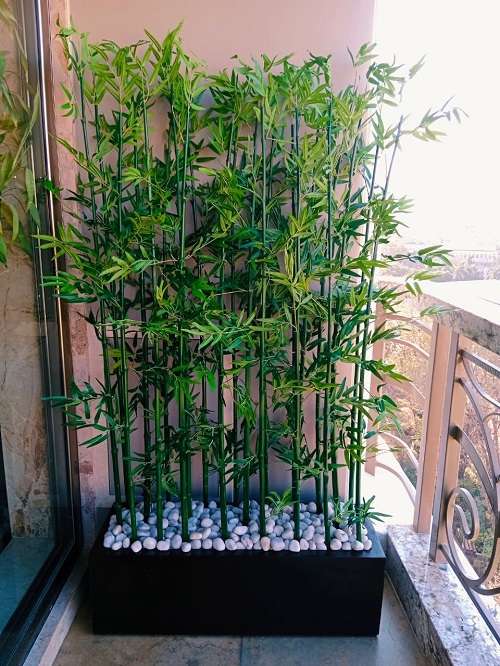
You can use gravel or stones around the base to improve stability. Secure hanging baskets with suitable outdoor hooks.
How to Make Artificial Outdoor Plants Look Real
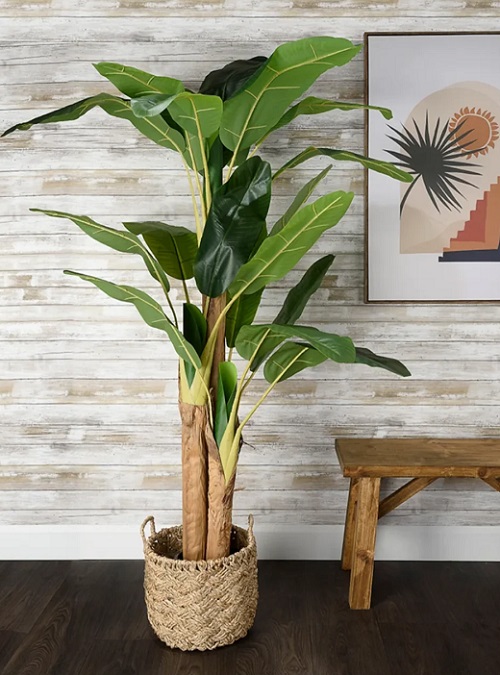
- Even good-quality artificial plants can look fake if you arrange them carelessly. Use different plant heights and leaf shapes to create a more natural display.
- Place a tall palm in the corner, add a medium-sized leafy plant beside it, and use smaller flowering plants near the front. You can also mix green plants with colorful flowers.
- Choose attractive planters that suit your outdoor furniture. Terracotta, stone-finish, and textured resin pots can make artificial foliage look more natural.
- Avoid placing several identical plants in a straight line. Instead, group them in small arrangements with some space between each pot.
How to Clean and Maintain Artificial Outdoor Plants
- Artificial plants do not need watering or fertilizer, but they still collect dust and dirt. Clean the leaves regularly with a soft cloth or brush.
- For stubborn dirt, use a damp cloth or gently rinse the plant if the manufacturer’s instructions allow it. Let the foliage dry completely before placing it back.
- Check the stems and leaves after strong winds. Adjust loose branches and remove cobwebs or fallen debris. If you expect heavy rain or storms, move lightweight plants to a sheltered place.
- Regular cleaning helps artificial plants maintain their appearance for longer.