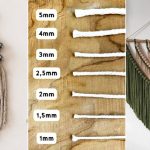

Choosing the right cord is easier with this Macrame Cord Thickness Guide. Compare cord sizes and find the thickness that suits your project.
Choosing macrame cord thickness is easier once you stop trying to find one size that works for everything. A small bracelet and a large wall hanging obviously need different cords, but the choice is not always that obvious when you are looking at spools online.
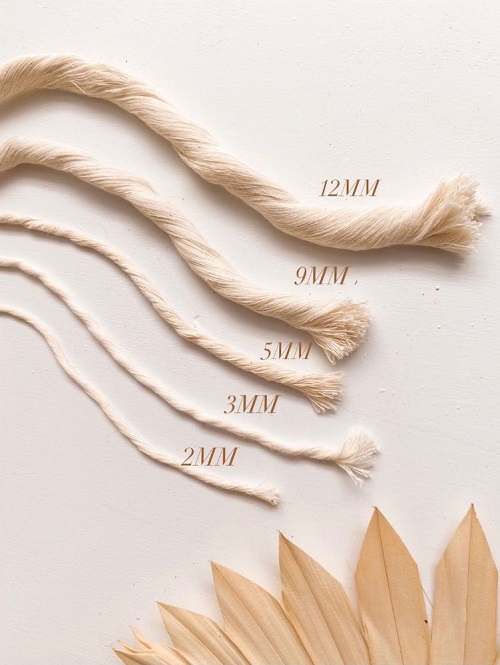
You will usually see cord listed by its thickness in millimeters. Common sizes include 1mm, 2mm, 3mm, 4mm, 5mm, 6mm, 8mm, and 10mm. Even a difference of a couple of millimeters can make a noticeable change in the finished piece.
If you have a pattern, use its recommended cord size as your starting point. If you are making something without a pattern, think about the size of the project and how you want the knots to look.
Macrame Cord Thickness Guide
What Does the Millimeter Size Mean?
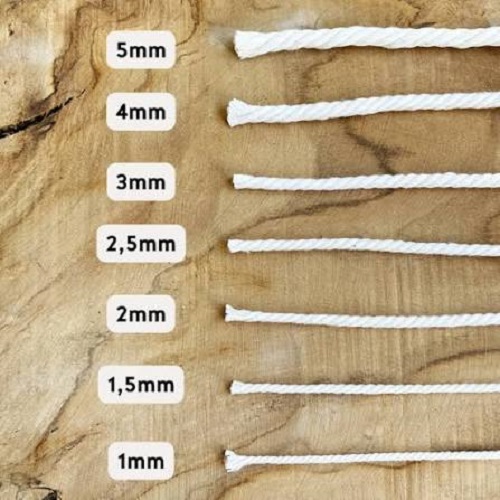
The millimeter number refers to the thickness of the cord.
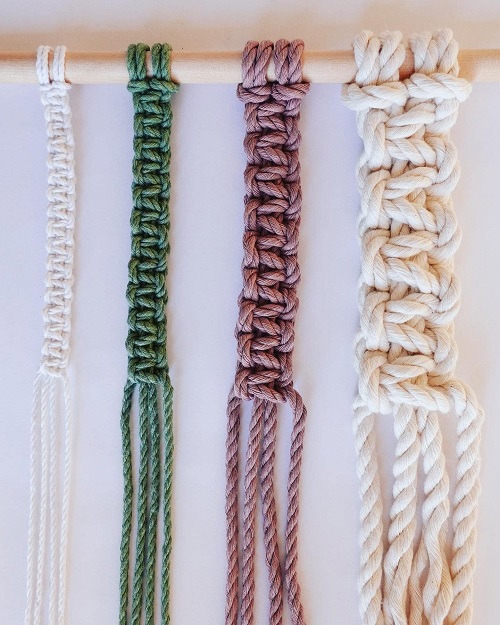
A 2mm cord is fairly fine. An 8mm cord is much thicker and will make a completely different-looking knot, even when you tie exactly the same knot.
This is easy to notice when you work with the cord yourself. Thin cord makes small knots and lets you fit more detail into a small area. Thick cord takes up much more space, so the knots become part of the visual focus of the project.
That is really the main thing to remember when choosing a size.
Small Macrame Projects
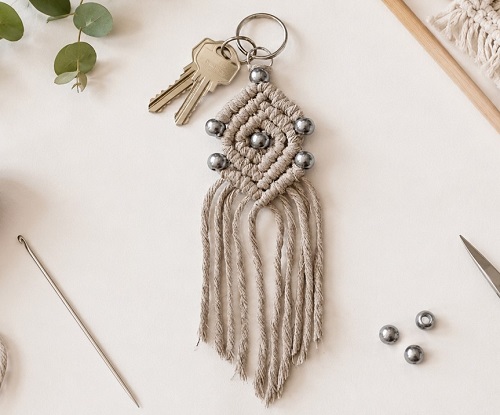
If you are making jewelry, a keychain, or another small piece, you probably do not want a thick cord taking over the design.
1mm and 2mm cords are useful here. They can be used for bracelets, anklets, earrings, necklaces, beaded macrame, and micro macrame.
The trade-off is that fine cord can be fiddly. Small knots are harder to see and handle, particularly when you are still learning.
For a project with a lot of tiny details, though, that smaller size can make a big difference.
Everyday Macrame Sizes
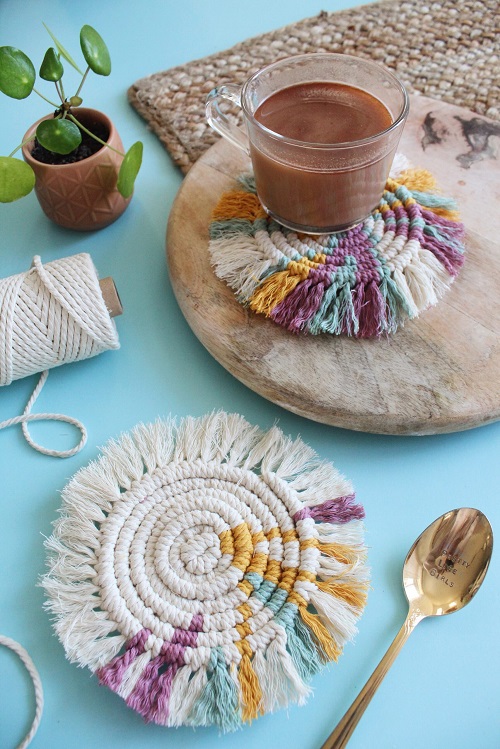
For many home projects, you will probably find yourself working somewhere around 3mm to 5mm.
A 3mm cord is still fairly easy to use for detailed patterns. It can work well for smaller wall hangings, coasters, curtain tiebacks, and plant hangers.
4mm is a useful all-round size. It is thick enough that you can see what you are doing, but it does not make every knot look oversized. Plant hangers, bags, baskets, wall hangings, and other home projects can all be made with it.
Then there is 5mm. The difference from 4mm may not sound like much, but the finished knots have more weight. If you want your project to look a little chunkier, this is worth trying.
These sizes are not strict categories. A plant hanger does not have to be made with 4mm cord, for example. The pattern and the look you want matter more than the name of the project.
When Thicker Cord Makes Sense
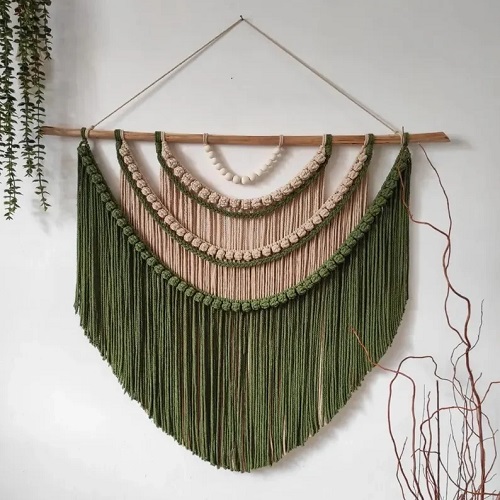
Once you get to 6mm, 8mm, and 10mm, the cord itself becomes much more noticeable.
These sizes can work well for large wall hangings, room dividers, headboards, oversized plant hangers, and simple chunky designs.
You need to think about the knot pattern before using very thick cord. A design with lots of tiny knots may look cramped because the cord is already taking up so much space.
For a large, simple pattern, however, thick cord can save you from making row after row of small knots just to fill a large area.
Does Cord Thickness Change the Size of the Project?
Yes, and this is easy to overlook when changing a pattern.
Suppose a pattern uses 5mm cord and you decide to use 3mm instead. You can still make the same knots, but they will take up less space. If you follow the original number of rows, your finished piece may be smaller.
The reverse can happen with thicker cord. Your knots take up more room, so the project can become larger than expected.
The amount of cord you use can change too. A thicker cord uses more material in each knot, so you should not assume that fewer knots always means less cord.
If you are changing sizes, make a small section first. It is much easier to adjust your plan after tying ten knots than after cutting fifty pieces of cord.
Can You Use a Different Size From the Pattern?
You can, but do not expect an identical result.
Sometimes you simply have a different size of cord on hand and want to use it. There is nothing wrong with trying it. Just check the first few rows before cutting all the remaining cord.
Your knot tension makes a difference as well. Two people can use the same cord and pattern but finish with slightly different measurements because one person ties tighter.
That is why there is not always a perfect formula for converting 5mm cord to 4mm or 3mm. A small test section is usually more useful.
The Cord Construction Matters Too
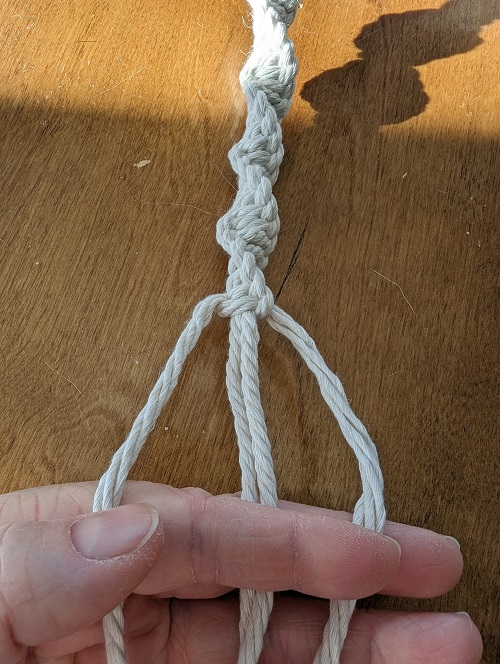
Thickness is not the only thing to look at when buying macrame cord.
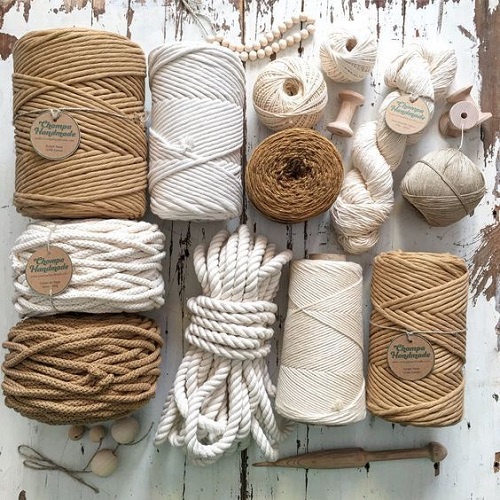
You will find single-strand, twisted, and braided cords, and they do not all behave in the same way.
Single-strand cord can be pulled apart and brushed out, which makes it useful when you want loose fringe or tassels.
Twisted cord keeps its twist in the finished knots and gives the project a different texture.
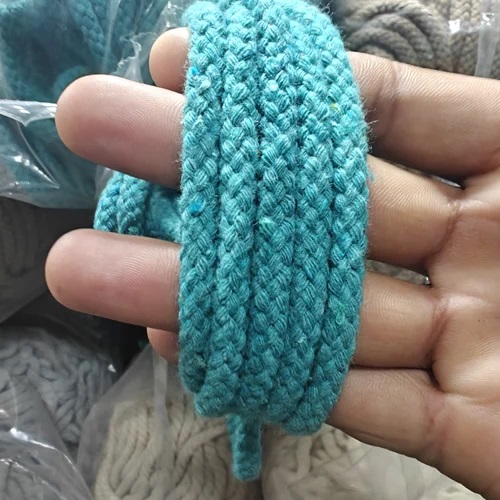
Braided cord stays together more firmly. It is less likely to separate while you are working, which can be helpful when you want a neat finish.
Waxed cord is another option, especially for jewelry and small macrame projects. It has a different feel from the cotton cords commonly used for plant hangers and wall decor.
So if a pattern says 4mm cord, do not look at “4mm” and stop there. Check what kind of cord the designer used if that information is available.
What Size Should You Start With?
If you are completely new to macrame and do not have a particular project in mind, 4mm is a sensible size to try.
It is large enough for you to see the knots without making them excessively bulky. You can use it for a range of projects and get a good feel for how the cord behaves.
Once you have worked with it, try something thinner. Then try something thicker. The difference becomes much easier to understand when you have actually tied the same basic knots with both.
If you are choosing cord for a particular pattern, though, I would not change the size just for the sake of experimenting. Start with what the designer recommends.
Before You Buy
Look at the pattern, if you have one, and check the cord size and total length it calls for.
Then look at the type of cord. A 4mm single-strand cord will not necessarily give you the same finish as a 4mm braided cord.
Think about the amount of detail in the design too. Fine cord gives you more room for small knots, while thick cord works better when the design is larger and less crowded.
Most importantly, do not judge a cord only by its appearance on the spool. Once you start knotting, the difference becomes much more obvious.
After you have tried a few sizes, you will usually develop a preference. You will know when a cord feels too fine for your hands or when a thicker one is going to make the knots larger than you want. That is often more useful than memorizing which millimeter size belongs to which project.