
Learn Basic Macrame Knots for Plant Hangers and start making simple, sturdy plant holders with easy steps you can follow at home.
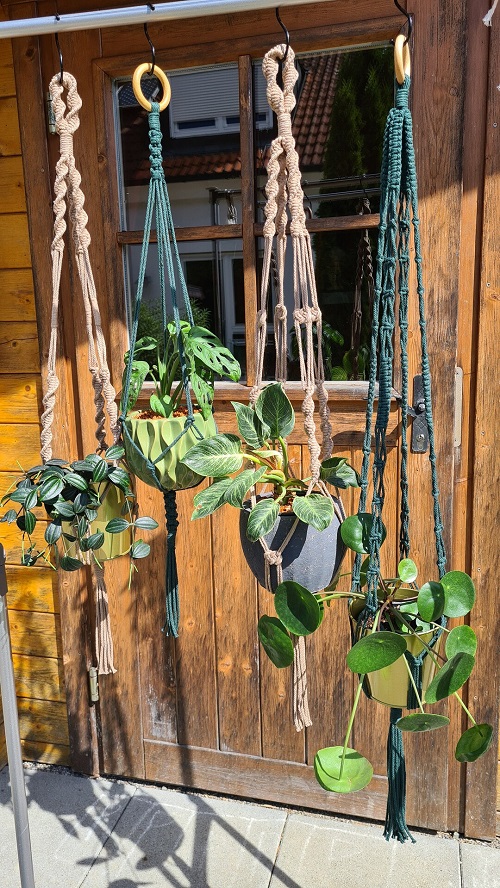
New to macrame? You don’t need to learn a long list of knots before you can make something. A few basic ones are enough to get started with plant hangers, wall hangings, keychains, coasters, and other simple projects. The good news is that you can start with just a handful of basic knots. Once you get comfortable with the cord in your hands, you can combine these knots in different ways and gradually take on more detailed designs. So grab some macrame cord and a pair of scissors, and let’s go through five useful Basic Macrame Knots for Plant Hangers to learn first.

What Do You Need to Start Macrame?
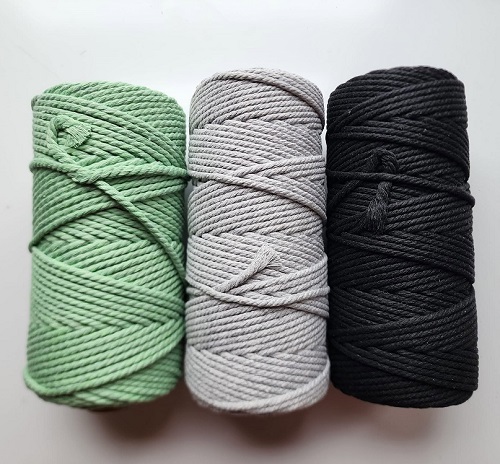
You don’t need a lot of supplies for your first attempt. Keeping your setup simple can actually make learning easier.
Here are the basics you’ll need:
- Macrame cord
- Sharp scissors
- Measuring tape
- A wooden ring, dowel, or stick, depending on the project
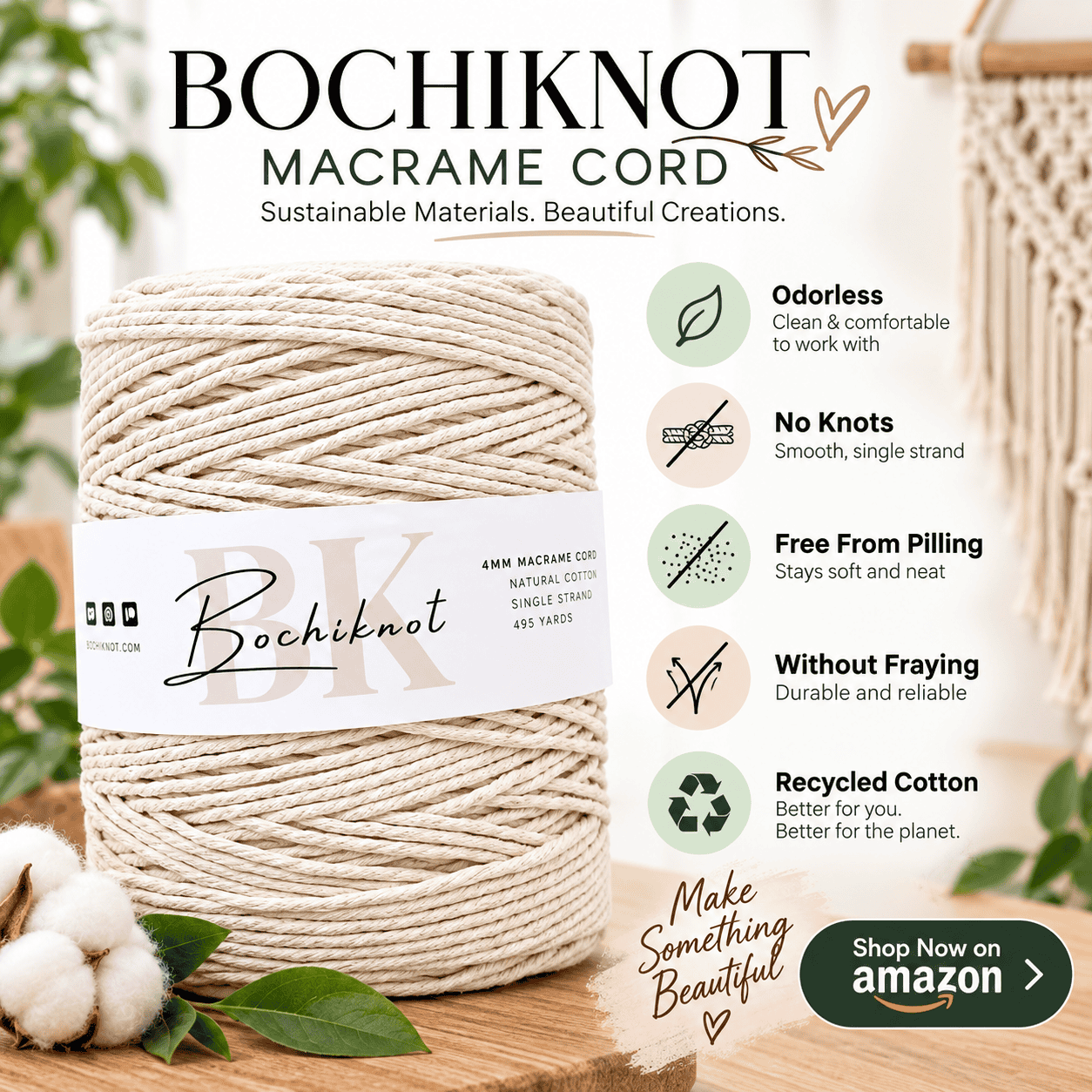
For beginners, 3 mm or 4 mm cotton cord is a good option. It is easy to handle, and the knots are usually easy to see as you practice.
You don’t have to buy a huge roll of cord right away, either. Start with enough for a small project and see how you like working with it. You can always try different cord sizes and materials as you gain experience.
Basic Macrame Knots for Plant Hangers
Let’s start with five knots that are useful for a range of beginner projects.
1. Lark’s Head Knot
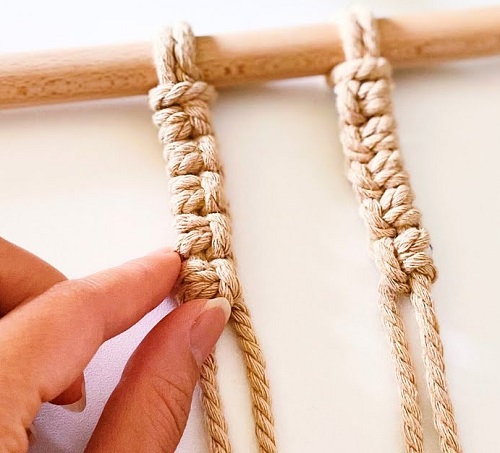
The Lark’s Head Knot is a useful place to start because it is often used to attach cord to a ring, dowel, branch, or another base.
It is also one of the easiest knots to learn.
Fold a piece of cord in half and place the folded loop over your ring or dowel. Pull the two loose ends through the loop and gently tighten the cord.
That’s all there is to it.
You will often see this knot at the beginning of macrame plant hangers and wall hangings. Once you know how to make it, attaching your cords to a base becomes much easier.
2. Square Knot
The Square Knot is one of the most useful macrame knots to learn. You will come across it in many different types of projects, from plant hangers and wall hangings to small accessories.
A basic square knot uses four cords. The two middle cords stay in place while the two outer cords move around them.
Make the first half of the knot, then repeat the movement from the opposite side to finish it.
It can feel a little awkward the first few times. That’s normal. Work slowly and pay attention to which cord goes over and which one goes underneath. Once your hands get used to the movement, the knot becomes much easier.
You can repeat square knots to create wider sections, borders, and different patterns.
3. Spiral Knot
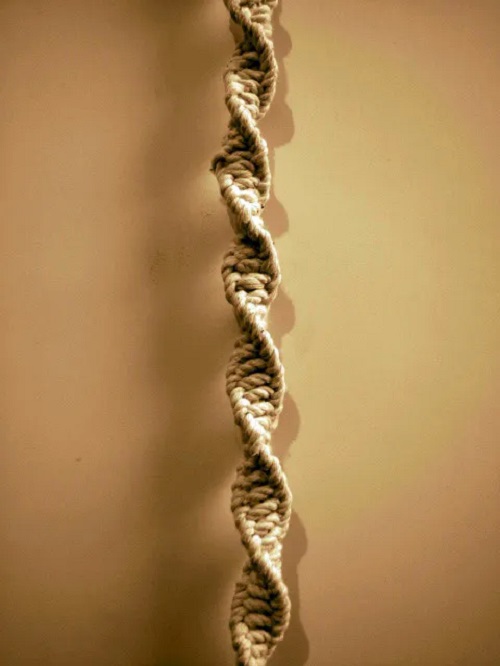
The Spiral Knot is a simple way to add a twisted detail to your work.
It starts with a movement similar to the Square Knot. The difference is that you continue making the knot from the same side instead of switching sides each time. As you repeat the movement, the cords begin to twist naturally.
This knot works nicely on plant hangers and other projects where you want a little extra texture.
Don’t worry if your first few attempts don’t look like a neat spiral. Keep the tension fairly even and continue tying. The twist becomes easier to see as the section gets longer.
4. Half Hitch Knot
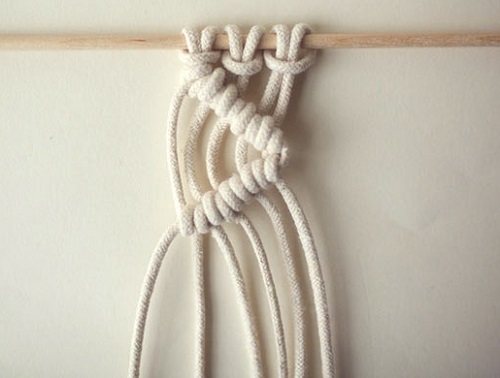
The Half Hitch Knot is useful when you want to create lines, curves, borders, and other patterns.
It gives you more control over the direction of your design than a basic square knot. By changing the position of the holding cord, you can make straight rows or gentle curves.
This one may take a little more practice, so don’t feel that you need to get it perfect right away. Start with a few rows and concentrate on keeping the tension similar from one knot to the next.
Once you are comfortable with the movement, you can use half hitch knots to make more interesting patterns and shapes.
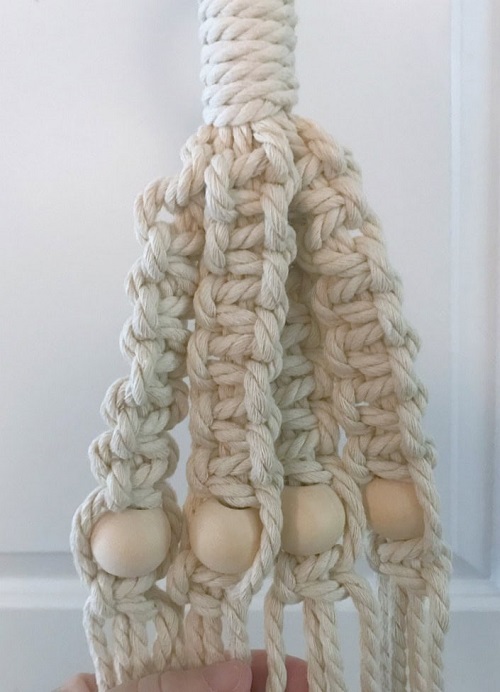
5. Gathering Knot
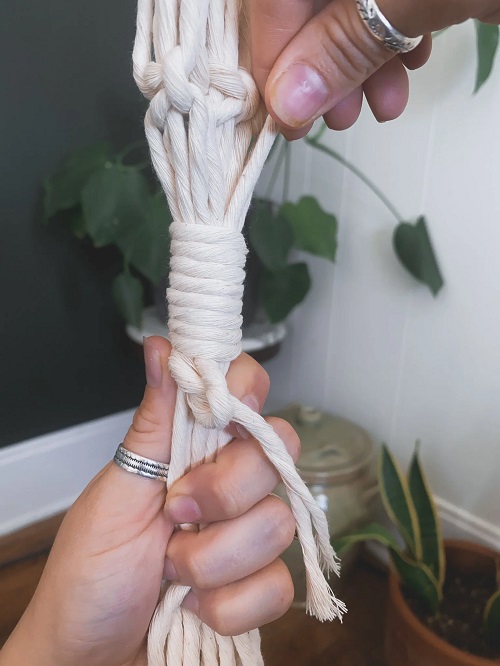
The Gathering Knot has a simple but important job. It pulls several cords together and keeps them securely in one place.
You will often see it near the bottom of a macrame plant hanger, where several groups of cords come together. It can also be useful when finishing a project or tidying loose strands.
This knot may not be the first one you think of when learning macrame, but it becomes very useful once you start making plant hangers and other projects with several strands.
Practice These Knots Before Starting a Big Project
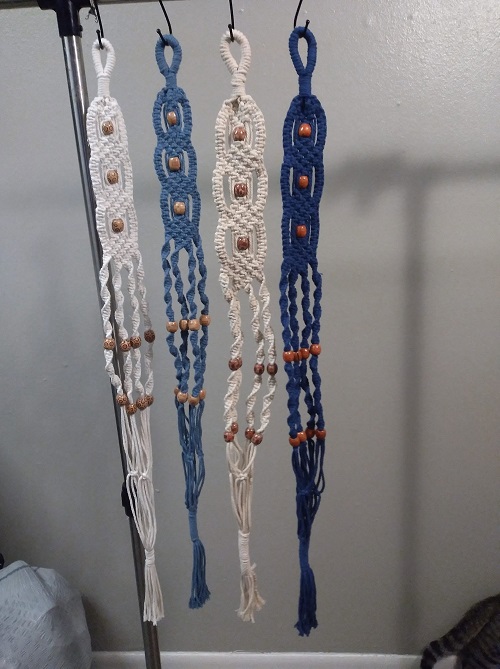
You don’t need to spend hours practicing before making something. A small piece of scrap cord is enough to get your hands familiar with each movement.
Try making a few Lark’s Head Knots first. Then move on to square knots and spiral knots. Once those feel comfortable, spend some time with the Half Hitch and Gathering Knots.
Don’t worry if your knots look uneven at first. Your tension will probably change while you are learning. Some knots may be too loose, while others may end up much tighter than you intended.
That’s part of learning macrame.
It can also help to undo a knot and try it again rather than cutting the cord when something goes wrong. After a little practice, you’ll start to recognize where you made a mistake and how to fix it.
What Can You Make With These Knots?
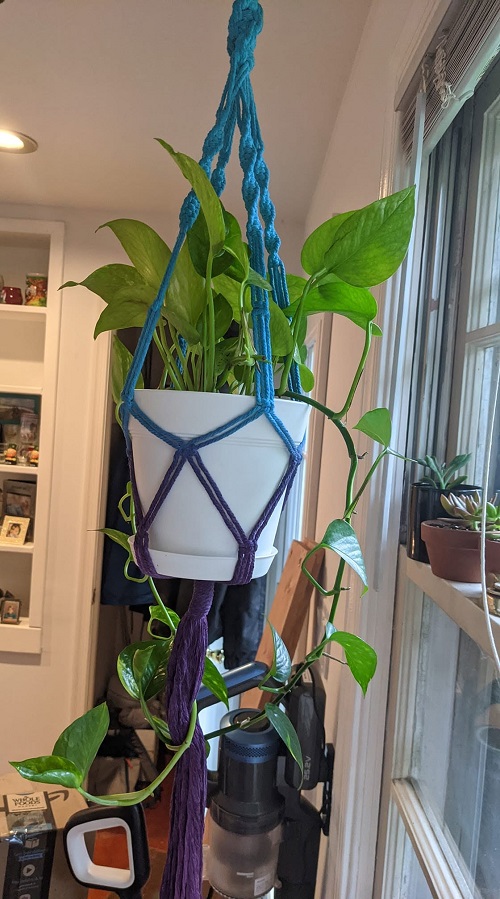
You can do quite a lot with just these five knots.
A Lark’s Head Knot can help you attach cords to a ring or dowel. Square knots can form the main body of a plant hanger or wall hanging. Spiral knots add a twisted section, while Half Hitch Knots can create lines and patterns. A Gathering Knot can bring several strands together when you need to finish or secure part of the design.
Once you understand how each knot works, try combining two or three of them. You don’t need a complicated pattern to make something that looks good.
A small plant hanger is a good first project because you can practice several knots while making something useful for your home. A small wall hanging is another option if you would rather keep your first project simple.
Start With One Small Project
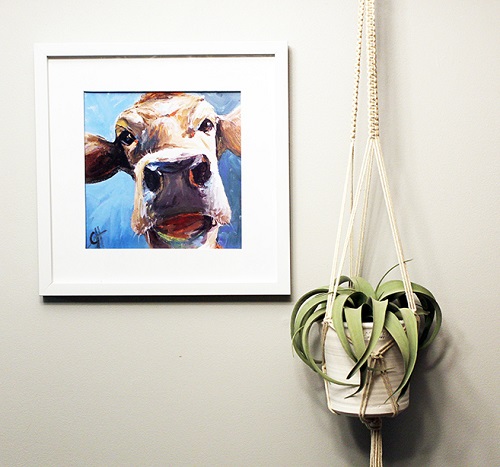
You don’t need to know dozens of macrame knots before picking up your cord. Learn these five first and give yourself some time to get comfortable with them.
Your first few knots may not be even, and that’s okay. Macrame is a craft you learn with your hands, so the movements become easier through practice.
Once you feel comfortable, choose a small project that uses the knots you already know. You can then add new techniques as you go instead of trying to learn everything at once.
Start with a few cords, take your time, and enjoy the process. Your first piece doesn’t have to be perfect. It just needs to get you started.